Planting Performance at MERL happened on 5 March 2010 11am-1pm. Weather conditions for the Planting were good; frost overnight, sun bright and warm, slight breeze, last rainfall a few days before, specifics for planting were appropriate.

allotment52

Grounds men had recently deposited a large pile of compost that was available for usage. The compost was derived from recycled green waste at the University. Some of the compost was shoveled into three wheelbarrow loads and delivered to the Allotment Plot, then shoveled out and spread with the use of an historic rake. The rake was purchased at a car boot sale four years ago and handed to the artist.

Perform Raking

Seed planting began including conversation. Artist as a subject is not a gardener, but Artist is performing planting and gardening. Artist is planting performance within the arena of MERL, the museum’s garden. The Allotment Plot is a performance area. Performance and growing is the artist’s medium, for the artist this is the same as painting or sculpture.  The artist’s intention is to encourage critical debate with persons that may come into direct or indirect contact with the artist. The aesthetic surrounds ethics and political motivation or material. The viewer may or may not wonder what other impulses are hidden behind the Allotment Plot. There is more within and behind the Plot.

Perform Writing

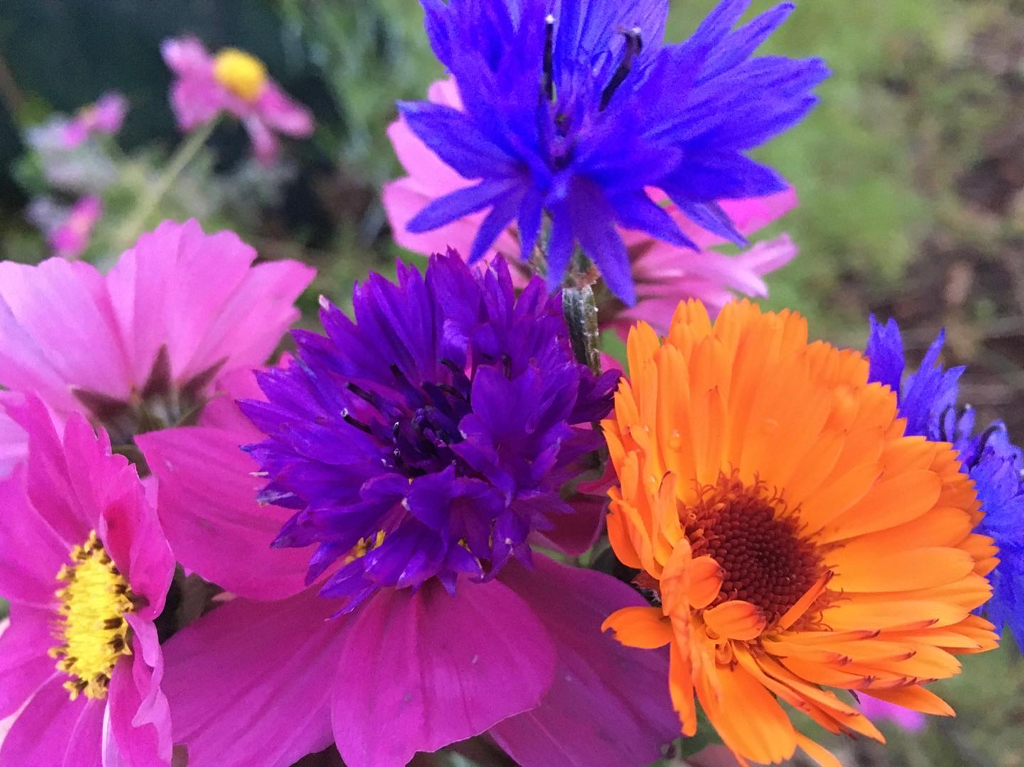
Organic vegetable seeds planted were as follows: 2 rows of Brussels Sprouts ‘Darkmar 21′, 1 row of Cauliflower ‘Snowball’, 2 rows of Parsnip ‘Halblange White’, 1 row of Carrots ‘Amsterdam Forcing’, 1 row of Kale ‘Pentland Brig’. Other organic herb and flower seeds were also planted; Dill, Coriander Santos, Flat Leaved Parsley, Borage, Nasturium, Pot Marigold ‘Calendula Officinalis’ and Cosmos ‘Cosmea’.

Perform Seed Planting

What seeds germinate and what will survive to grow to maturity is a hidden mystery, unpredictable from the start. Harvest is the intention. Weather acts as an agent. Wild life that is present in the garden can harvest at will unless blocked by human interference. Biodiversity acts out its role as assistant in promotion and deterrent in the organic state, with no need for chemical warfare.

Allotment Planting Performance

The seedlings were transported from the studio to a new growing location. The location or place being The Fixed-Up Greenhouse, which has become an extension of the studio, a working area for art practice and a home for the seedlings until they are ready to be planted out at the Allotment Plot at MERL

The studio location was also moved, further down the corridor to a different space. A blank white wall appeared in order to negotiate art practice. What is the relationship of art practice in the studio to seedlings growing as art practice in The Fixed-Up Greenhouse, the Allotment Plot at MERL and the research for art practice? Theory, fact and fiction may surround the groundwork. Seedlings in GreenhouseGreenhouse SeedlingsGreenhouse

The Allotment Plot’s specificity is plant life growing at a Place which contains the Plot. The Place and its multiplicity is fold and refolded. The plant life’s roots and radicles are growing around the groundwork of the Plot. The Art Practice is wrapped with roots that radiate and shoot. All plant life being in its specificity not entirely rhizomatic.

Plot Febrauryallotment46Tiny Pepper PlantsTomato Growing

“A rhizome as subterranean stem is absolutely different from roots and radicles. Bulbs and tubers are rhizomes. Plants with roots or radicles may be rhizomorphic in other respects altogether: the question is whether plant life in its specificity is not entirely rhizomatic.” (Deleuze & Guattari – A Thousand Plateaus).

Why is the caterpillar on the broadbean plant at the allotment plot in February? Where has it grown from? Surely no butterfly has fluttered by and perched long enough to deliver eggs that have then grown over a week into a fat caterpillar? Or has the caterpillar overwintered on the broadbeans surviving the chill of winter, choosing not to turn into a crysalis or to evolve into a moth or butterfly? Was the caterpillar found by a passing bird that spied a worm so dropped the caterpillar into the broadbean leaf to cradle? The multiplicity of event occurs and mystery at the allotment plot.

Caterpillar

The first seedlings were re-potted in the studio allotment on the 4th February.  The tiny seedlings were tentatively dug out of their plug trays with a spoon, then delicately transplanted into the waiting earth in their new (recycled) pots. Their radicles (embryonic roots) were carefully covered. Their hypocotyls (embryonic shoots) uncertainly sitting weakly in the soil, bowed under the weight of their new cotyledons (seed leaves). Quantities of germinated seedlings were recorded.

Seedling Re-potting

Seedlings germinated and re-potted: 13 Tomato Zuckertraube, 12 Tomato Gardeners Delight, 6 Tomato Chadwick, 4 Nastirum, 5 Cosmos, 2 Carnations, 5 Pot Marigold, 4 Flat Parsley, 5 Sweetpeas, 2 Sage

Not all the seedlings had sprouted. Only one onion had sent a slender green spike out of the soil. No Aubergine or peppers had appeared, their radical transformation from dormant seeds to photomorphogenesis would seem to be delayed in transmission by an undetermined set of reasons that can only be speculated but would seem rooted in probability.

Re-potted

More seeds were planted at the studio allotment on the 27/01/2010.  The seeds were sourced from Tamar Organics. These seeds planted were as follows:

Aubergine Black Beauty x 15

Pepper Sweet Tamar x 15

Pepper (Hot) Ring of Fire x 12

Pepper (Hot) Early Jalapeno x 12

Pepper Seeds

Aubergine Seeds

The seeds that had germinated on 29/01/2010 were recorded as follows:

Tomato Zuckertraube = 10

Tomato Gardeners Delight = 5

Nasturium = 3

Pot Marigold = 11

Sweet Pea = 5

Cosmos = 6

Carnation = 3

If seeds are rooted too early, life support may fail due to weather intervention. This failure can happen in the internal designated growing space, in this case the studio, (or more commonly in a greenhouse or domestic interior area) and externally, when a plant is growing in the open air. Failure in the growing cycle can happen unexpectedly at any given time due to adverse weather conditions. The breakdown of the organic growing machine and catastrophic crop failure can fracture systems and cause devastation for species. It is not just a question of survival of the fittest but an attribute of unpredictability out of human control.

The Allotment in the studio is in its early stages. Within the first week that the seeds were planted, tiny seedlings started to emerge, somewhat prematurely. “January – March” was the suggested planting window on the seed packets, but if the plants develop too soon there is a danger that they will die and be lost, composting themselves back to the earth. Careful management and monitoring of the seedlings will need to take place. Although growing and germinating conditions are obviously good as a consequence of enough heat and light, life support may not be that easy. The seedlings will need re-potting fairly soon. The process of growing and food production begins rooted in the studio prior to the outdoor growing destination at the Allotment at MERL.

Seedlings

Seeds were planted in the studio for the MERL allotment plot. The studio will act as a propagator for the photosynthetic organisms to generate. Old plug trays were used as initial receptacles for seed germination. Seeds are from Tamar Organics. Compost orginated from recycled green waste matter collected by RBC processed into compost and then sold back to the community.

January seed plantings:

Tomato – Gardeners Delight (x 18)

Tomato – Chadwick (x 12)

Tomato – Zuckertraube (x 12)

Onion – Red Baron (x 18)

Sage – Salvia Officinalio (x 12)

Flat Leaved Parsley (x 14)

Companion Planting seeds (very important in the organic growing process):

Cosmos – Cosmea (x 20)

Pot Marigold – Calendula Officinalis (x 19)

Sweet Pea – Tamar Mix (x 13)

Nasturium – Organic Mix (x 5)

Dahlia (x 7)

Carnation – (Giant Chabaud Mixed (x 7)

Seed Planting

After a week when the allotment plot at MERL was covered in snow, the vegetable plants are still surviving, but some are suffering frost and snow damage. It would seem frost burn is the condition, a few of the broadbeans are slightly effected, as is the garlic and the peas more so, but there are no outright casualties. The ‘Sprint’ garlic is growing (sprinting), much more quickly than the ‘Thermidrome’ garlic, which is only just appearing out of the soil. The onion sets growths are very slow. Can the aesthetic condition of a vegetable reflect the state of the world through political consensus? Or is the political to blind to see the aesthetic?allotment32Broadbeans Frost BurnPeas Frost Burn

allotment35

On Tuesday 5th January the allotment was visited before the subsequent significant evening snowfall. An hour after the visit, the snow started to fall. By morning Reading was covered in a thick blanket of 8-10 inches of snow.

At the time of the visit all the vegetables were remarkably still alive. The broadbeans and garlic looked very healthy, but the peas looked like they are suffering from frost damage.

Peas and Broadbeans

Three days later, the snow has not melted. The UK and indeed much of the northern hemisphere have been engulfed by freezing temperatures. Business is not as usual for many in the UK, because roads are hazardous with snow. The largest snowfall in thirty years in the UK or the freezing winter temperatures were unpredicted, these conditions are the weather, they do not indicate climate change is not warming and if anything are all part of that, because the southern hemisphere is experiencing higher temperatures than ‘normal’ for this time of year.

How weather conditions affect society as behavorial patterns adept to limitations of conventional activity through commerce and consumption is played out through profit and loss. Vegetations slow growth, in winter’s freezing and snowy conditions, lies dormant. However if the plant is not one that over winters this can result in demise and crop failure.

The winter spinach plants on the allotment plot were not planted earlier enough to provide food for winter, but their growth may increase if the weather becomes warmer.

Spinach Seedlings

Allotment Frost